

Every June, something remarkable happens at camps like ours. A kid who has spent the entire school year masking — carefully performing a version of themselves that fits into a neurotypical world — arrives at camp and, within a day or two, exhales. They meet another kid who also loves deep-diving into obscure topics. They find a bunkmate who understands what it’s like to need a few minutes of quiet before dinner. They discover that the social rules here are different — kinder, more flexible, built for the way they actually think.
For many of our campers, it’s the first time they’ve felt genuinely at ease around their peers.
If you’re the parent of a neurodivergent child — whether they’ve been diagnosed with ASD Level 1 (formerly known as Asperger’s syndrome), ADD or ADHD, NVLD, or have what’s sometimes called a “twice-exceptional” profile — you probably know exactly what that constant performance costs your kid. The exhaustion at the end of a school day. The social missteps that sting for days. The loneliness that can quietly accumulate when you never quite feel like you belong.
Overnight summer camp, the right overnight summer camp, can change all of that.
The Science of Belonging — and Why It Matters So Much
Researchers have spent years studying what helps neurodivergent young people thrive, and one finding keeps emerging: belonging is not a nice-to-have. It’s protective. A major 2024 scoping review published in Research in Developmental Disabilities found that a sense of belonging was one of the most consistent resilience factors for autistic youth and those with ADHD — buffering against anxiety, depression, and social withdrawal. Peer acceptance, in particular, was found to be protective specifically for children with ADHD in ways it wasn’t for neurotypical peers.
What this research underscores is something that experienced camp directors have observed for decades: neurodivergent kids often aren’t struggling because something is wrong with them. They’re struggling because their environment doesn’t fit them. When you change the environment — when you place them in a community full of kids who share their neurotype, their humor, their intensity, their quirks — the outcomes can be profound.
A recent study published in the journal Autism that followed autistic individuals across childhood into adulthood found that one of the most significant predictors of adult wellbeing was whether someone had found genuine community with others who “got” them. Participants who eventually connected with their neurodivergent peers described the experience in striking terms: finally feeling understood, finally being able to drop the performance, finally being able to form real friendships.
Camp can be where that happens first.
The Exhausting Work of “Masking” — and What Happens When Kids Can Stop
You may have heard the term “masking” — the strategy many autistic and ADHD kids use to suppress or hide their natural behaviors in order to fit in. Research published in 2025 in School Mental Health found that autistic adolescents who mask most heavily are also the ones most likely to report a profound lack of belonging, feelings of personal failure, and low self-worth. The mask works, in a narrow sense: it reduces social friction. But it comes at a steep cost to identity and mental health.
What’s striking about a well-designed neurodivergent summer camp is that kids don’t need the mask. There’s no social incentive to perform neurotypicality when everyone around you is, in some sense, wired the same way. Special interests aren’t embarrassing — they’re conversation starters. Needing a few minutes of downtime isn’t a weakness — it’s normal. The kid who wants to spend an entire free period explaining the history of a particular video game franchise, or the one who has memorized the migratory patterns of every bird in Vermont, finds their people here.
Dr. Emily King, a child psychologist who specializes in neurodivergent youth, has written about why summer camp is particularly powerful for kids who find school exhausting: school asks them to constantly engage with things they don’t find interesting while managing sensory environments and social expectations that weren’t designed for them. Camp flips the equation. The activities are engaging. The social structure is more forgiving. The whole point is fun — and through that fun, social skills develop naturally and organically.
More Than Social Skills: What Camp Actually Builds
We don’t think of Akeela as “social skills training”. That just wouldn’t be the right term for kids who are perfectly capable of deep, meaningful connection — they just need the right context for it.
What a good overnight camp for neurodivergent kids actually builds isn’t a checklist of social behaviors. It’s something harder to quantify and more important: confidence in one’s own identity.
When a camper discovers that their intense curiosity is an asset, not an oddity — that other kids find it cool that they know everything about Roman aqueducts or competitive Pokémon — something shifts. When they navigate a conflict with a bunkmate and come out the other side of it with the relationship intact, they carry that forward. When they try something new and succeed — a ropes course, a theatrical performance, a new friendship — they accumulate evidence that contradicts the story many of them have internalized: I’m bad at this. I’m too much. I don’t fit.
The overnight component of camp matters especially here. A day program ends at three o’clock. An overnight camp means your child is navigating real life — morning routines, shared spaces, meals, bedtime, all of it — in a community of peers. The skills that develop in that immersive, 24/7 context are different from anything a weekly social skills group can provide. They’re learned in context, through genuine relationships, with the kind of repetition that actually sticks.
Parents who’ve sent their kids to specialized overnight camps often describe the same phenomenon: their child comes home different. Taller, somehow. More confident. More willing to advocate for themselves. Having made, in many cases, friendships that have lasted for years.
“Is My Child Ready For Camp?”
This is the question we hear most often from parents, and it’s a great one. Sending any child away for the summer requires trust. Sending a neurodivergent child, one who may have had painful social experiences or who struggles with transitions, requires even more.
A few things to note:
- The right camp is built for your child’s profile. At a specialized camp like ours, the structure, the staffing ratios, the activity design, and the community norms are all oriented around the kids we serve. Staff are trained to recognize and support neurodivergent campers — not to push them toward neurotypical behavior, but to help them thrive as they are.
- Discomfort is not failure. Camp will have hard moments. Homesickness is real. Some social situations won’t go perfectly. But as child psychologist and camp expert Audrey Monke — author of Happy Campers — has noted, those moments of discomfort are often where the most meaningful growth happens. As parents, one of the hardest and most important things we can do is let our kids work through difficulty rather than shield them from it. The confidence they develop on the other side of a hard moment is genuinely their own.
- The community matters as much as the programming. What makes specialized overnight camps different isn’t just the activities — it’s who’s there. Your child will be surrounded by peers who share their neurotype. For many kids, this is a genuinely new experience: being in the majority, not the minority. Being normal here, for the first time.
The Friendships That Last
We’ve seen it over and over, for nearly two decades of running Camp Akeela: the friendships that form here are not ordinary summer friendships. They’re the kind built on genuine mutual recognition — I see you, and I’m like you — and those tend to hold.
Many of our alumni are still in close contact with their camp friends many years later. Some have gone on to college together. The neurodivergent community, when it finds itself, has a particular cohesion — because the experience of finally being understood is not something people take for granted or forget.
If your child has struggled to form lasting friendships, if they’ve come home from school feeling lonely or misunderstood more times than you can count, if they’ve never quite had their people — camp might be where they find them.
Is Camp Akeela Right for Your Child?
Campers who thrive at Camp Akeela have average to above-average intelligence and a neurodivergent profile that includes some need for social support. Many have been diagnosed with ASD Level 1 (formerly Asperger’s syndrome), ADD or ADHD (particularly inattentive type), NVLD, or a similar profile. Some come without a formal diagnosis but with a learning and social profile that fits our community. What they share is a particular kind of intelligence and creativity — and a wish, often unspoken, to finally have a place where they belong.
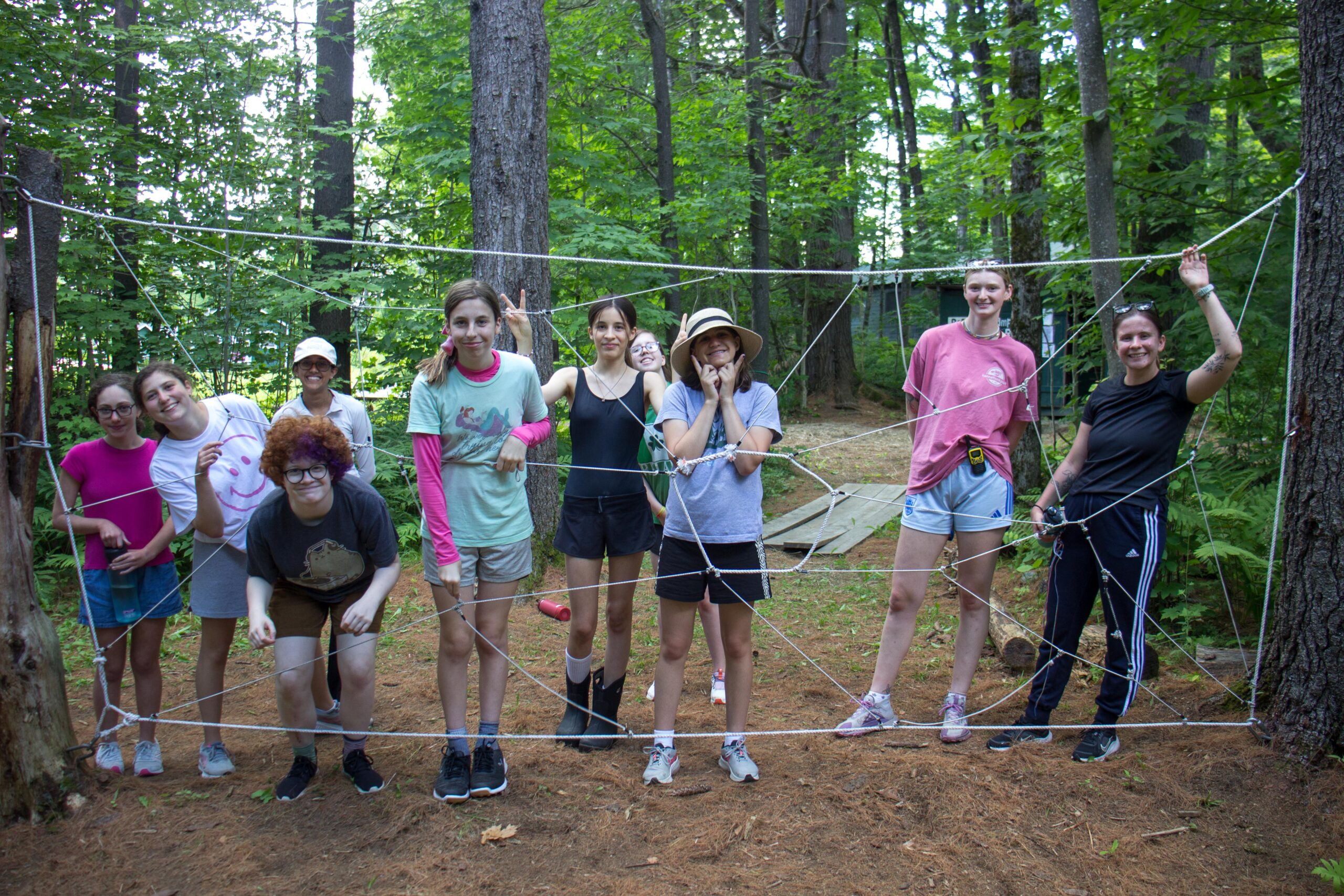
Our three-week overnight camp is set on 400 beautiful wooded acres in Vermont, with traditional camp programming that includes aquatics, outdoor adventure, arts, athletics, Dungeons & Dragons, and much more — all within a structure that’s been designed with neurodivergent campers in mind. We also offer Beyond Akeela for older teens (10th–12th grade) who are preparing for the transition to college.
We’d love to talk with you about whether Camp Akeela might be the right fit for your child. The best way to start is simply to reach out and connect with us.
Sometimes the most transformative thing we can do for our kids is give them a summer where they get to be exactly who they are — and discover that who they are is more than enough.


 Before I say more, I can start quite simply with this: Working at Camp Akeela has transformed my life.
  Debbie and Eric Sasson, Akeela’s directors, met each other 25 years ago when they were working at the summer camp that my husband and I owned. When I retired in 2016, after being a Special Education teacher for 28 years, the Sassons reached out to me about joining the Akeela community. I’ve always loved camp, so I figured why not give it one more summer?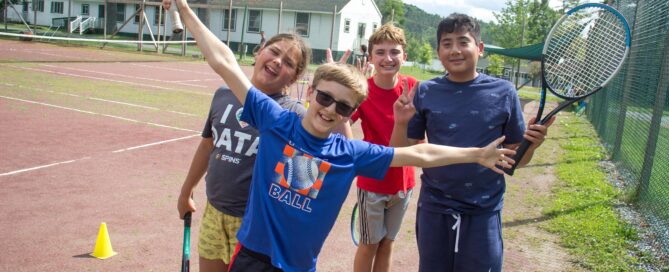



 Check out