
A new study shows that people with ADHD find it especially hard to stop watching short-form videos. Here’s what that means for neurodivergent kids – and why three weeks in a technology-free community can feel like such a reset.
Key takeaways
- New research on ADHD and screen time. A 2026 TU Graz study found people with ADHD have a harder time stopping short-form video, even though the videos aren’t any more appealing to them.
- The problem is the missing ending. Endless feeds leave stopping up to self-control, which is a tough ask for kids still building executive function skills.
- Endings help. Participants’ favorite fixes were forced breaks and a set number of videos, the same kind of structure that makes transitions easier for neurodivergent kids.
- Camp days have endings built in. As a technology-free summer camp, Akeela gives kids with ADHD a predictable rhythm, real friendships, and daily practice with independence and self-advocacy.
- You can apply these lessons home. Agreeing on limits in advance and setting a timer or routine signal can make stopping screen time far less of a battle.
If you’re the parent of a kid with ADHD, you probably know this scene. “Just one more video” turns into forty minutes. Dinner is getting cold. Homework hasn’t been started. And when the phone finally goes down, your child doesn’t look relaxed. They look a little frazzled, a little guilty, and maybe a little mad at themselves.
It turns out there’s brand-new research on ADHD and screen time that speaks to exactly that feeling. And it lines up with something we’ve watched happen at Camp Akeela, summer after summer.
What the “engagement trap” study found about ADHD and screen time
Earlier this month, researchers at Graz University of Technology (TU Graz) in Austria released a study with a title that will make a lot of parents nod: Quantifying the Engagement Trap. The team, led by Professor Elisabeth Lex, surveyed 302 adults about their experiences with TikTok, Instagram Reels, and YouTube Shorts. About half of them reported having ADHD.
Here’s what they found:
- The videos weren’t the problem. Everyone, with or without ADHD, said the recommended videos matched their interests equally well.
- Stopping was. Participants with ADHD were more likely to say they watched longer than they meant to, lost track of time, and had real trouble putting the phone down.
- The after-effects lingered. People with ADHD more often reported regret, guilt, a sense that the time wasn’t well spent, tasks left undone, and a worse mood than when they started.
The researchers call this the “engagement trap.” The feed never ends, so the only way out is your own self-control – summoned again and again, one swipe at a time. For anyone whose executive function challenges include impulse control, time awareness, and self-regulation, that’s a stacked deck. Lex and her colleagues are urging tech companies to stop designing purely for engagement and start designing for people’s sense of time and control. (The paper is being presented this month at ASSETS 2026, a major international accessibility conference, where it’s been nominated for Best Paper.)
A fair caveat: this was a survey of adults, based on their own reports, and it shows a pattern rather than proving cause and effect. But think about who answered it. These were grown-ups, with years of practice managing their own attention. Kids and teens, whose executive function skills are still very much under construction, are scrolling the very same feeds.
The problem isn’t willpower. It’s the missing ending.
Here’s the part of the study that stuck with us. The researchers asked participants which design changes they’d actually want. The favorites – across every group, not just people with ADHD – were forced breaks and a fixed number of videos per session.
In other words: an ending. Something outside of you that says, “That’s it for now.”
Endless feeds are designed to remove endings. And for a lot of neurodivergent kids, including those with ADHD or ASD Level 1 (what used to be called Asperger’s Syndrome), a clear ending is exactly what makes a transition manageable. Without one, every stopping point becomes a fresh battle – with the device, with a parent, and with themselves.
When it comes to ADHD and technology, we want to be clear: we are not anti-technology. For many neurodivergent kids, screens can be a genuine lifeline – a place to dive into deep interests, find community, and decompress after a long day of holding it together at school.
Plenty of our campers are gamers, coders, and YouTube experts the rest of the year, and that’s great. But every kid deserves to know what it feels like to spend time in a world that isn’t engineered to keep them scrolling.
Summer camp for kids with ADHD: a day full of natural endings
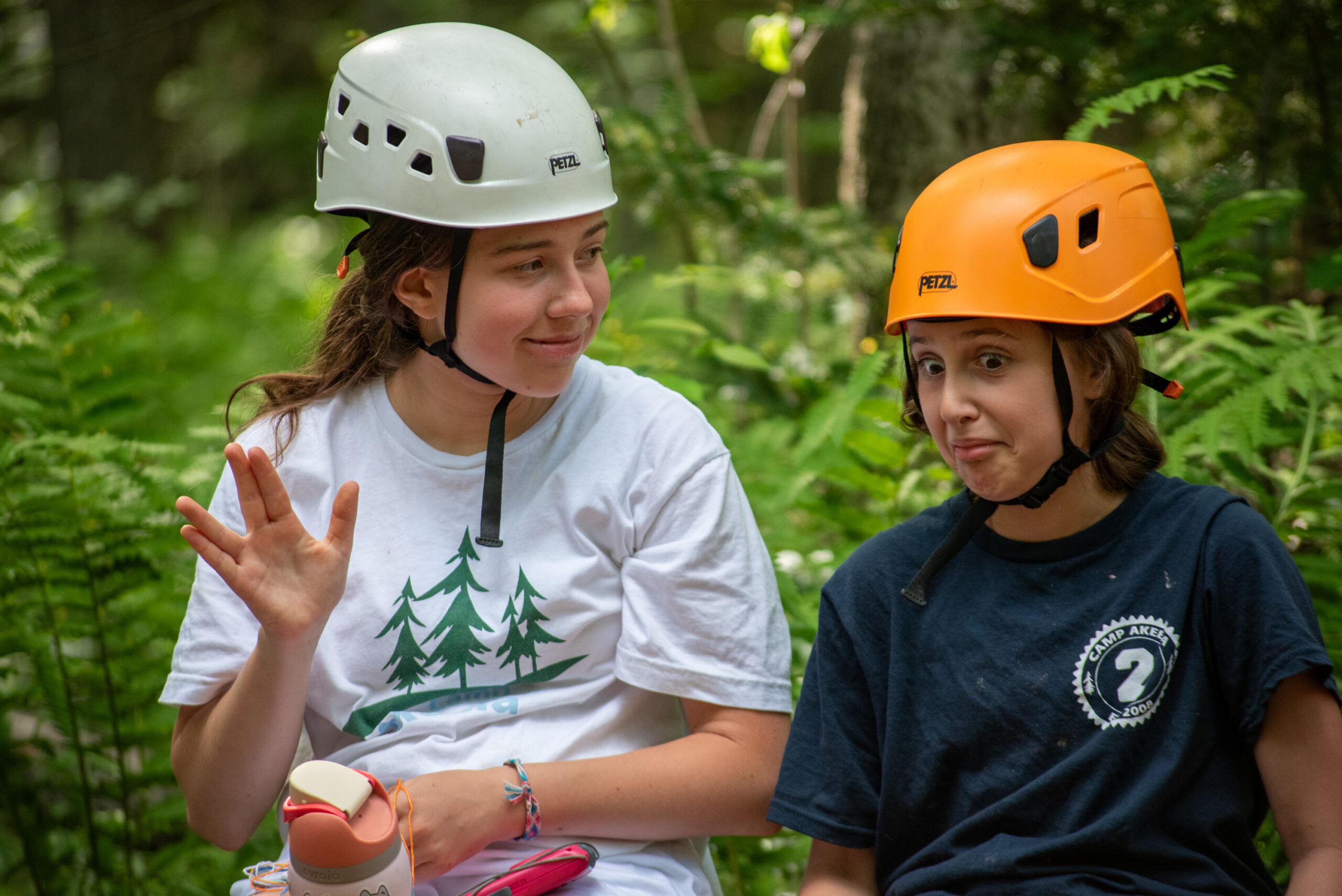
Camp Akeela is a neurodivergent summer camp and a technology-free community. No phones, no tablets, no feeds. Not as a punishment, but because unplugging makes room for something else.
And a camp day has endings built right in. Activity periods wrap up. A bell calls everyone to lunch. Rest hour ends. The campfire burns down to embers. Lights out. Nobody has to summon willpower a hundred times a day to stop doing something; the rhythm of the day does a lot of that work for them. For kids whose brains crave predictability, that structure isn’t confining. It’s a relief.
So what fills the space where scrolling used to be? Real things. A D&D campaign that picks up exactly where the party left off yesterday. An afternoon down at Miller Pond. A painting that takes three tries. A ridiculous bunk skit. A long conversation on the walk back from dinner.
Some of it is thrilling. Some of it is a little boring at first. That’s okay – a bit of boredom is often the doorway to creativity and connection. (We’ve written before about why a little healthy friction is good for kids.)
What kids get back
The TU Graz study described what’s left after a long scroll: regret, guilt, a dip in mood. What we see at the end of a camp day looks a lot more like the opposite. It’s worth naming, because it’s the heart of what we do.
Genuine, lasting friendships. A feed can’t laugh at your joke or save you a seat at breakfast. Friendships grow from shared, repeated experiences – the same faces at meals, at activities, and around the campfire, day after day for three weeks. Research backs up what our campers tell us: a 2025 study by Rebecca Sharman and Teresa Seedorf found that neurodivergent people tend to have more neurodivergent friends, and participants described a strong sense of connection and belonging with people who communicate the way they do. At Akeela, kids are surrounded by quirky peers who truly get them. Many of those friendships last for years.
Independence. Without a device to fill every gap, kids take on a bit more of their own day. Getting ready in the morning. Keeping track of their stuff. Choosing activities. Figuring out what to do with a free half hour. Counselors are right there to coach – but not to do it all for them.
Self-advocacy. Noticing “I’m tired,” or “I need a quiet minute,” or “that hurt my feelings” – and then saying it out loud to a counselor or a friend. That’s a hard skill to practice while staring at a screen. Camp offers dozens of low-stakes chances to practice it every single day.
Feeling great about themselves. At the end of a camp day, kids rarely feel like time slipped through their fingers. They know exactly what they did. They climbed something, made something, helped someone, laughed with someone. That’s a very different way to fall asleep.
Bringing a little camp home this school year
You don’t need to be in the Vermont woods to borrow some of this. Parents often ask how much screen time a child with ADHD should have. There isn’t one magic number, and the structure around screens tends to matter as much as the minutes. A few ideas, inspired by the research and by life at camp:
- Add endings on purpose. Agree on a number of videos or episodes ahead of time, instead of “a little while.” Experts at Children and Screens suggest telling neurodivergent kids in advance exactly how much screen time they’ll get, which can head off a lot of power struggles.
- Let something else be the bad guy. A visual timer, a scheduled snack, or a set routine can signal the stop, so it’s not a test of willpower or a fight with you.
- Ask how it felt – without shame. “How do you feel after that?” builds self-awareness, which is the first step toward self-advocacy.
- Fill the space with something real. Board games, D&D, cooking together, a walk with the dog. The goal isn’t zero screens. It’s making sure the feed isn’t the only option.
- Celebrate the stop. When your kid puts the device down on their own, notice it out loud. That’s executive function in action.
Frequently asked questions
Short-form video feeds never end, so stopping depends entirely on self-control. A 2026 study from Graz University of Technology found that people with ADHD were more likely than others to lose track of time, watch longer than planned, and struggle to stop – even though the videos weren’t any more appealing to them. Differences in impulse control and time awareness make this “engagement trap” harder to escape.
Yes. Akeela is a technology-free summer camp: campers don’t have phones, tablets, or other personal devices with screen content during their session. Music players and e-readers are welcome, as long as they don’t hold videos, games, or other screen content. Families still receive regular communication and updates from camp, so parents stay in the loop while kids stay present.
It’s normal for kids to feel nervous about unplugging. In our experience, the first few days are the biggest adjustment. Once routines settle in and friendships start forming, most campers are far too busy to miss their screens.
Yes, along with other neurodivergent profiles. Camp Akeela is a co-ed overnight camp in Strafford, Vermont, for neurodivergent kids completing grades 3 through 10. Many campers have been diagnosed with ASD Level 1 (formerly Asperger’s Syndrome), ADHD, NVLD, or a similar profile, though a formal diagnosis isn’t required. Older teens can join our Beyond Akeela program.
Camp Akeela runs two three-week sessions of 22 days each. That’s short enough to ease worries about being away from home, and long enough for real friendships and real growth to take root.
There’s no single research-backed limit specific to ADHD. The American Academy of Pediatrics encourages families to create a personalized Family Media Plan instead of relying on one number. For many kids with ADHD, predictability matters most: agree on limits ahead of time, use clear endings like a set number of videos or a visual timer, and make sure sleep, schoolwork, and offline play come first.
Three weeks off the feed
The researchers at TU Graz are asking tech companies to build endings into their apps. We’d love to see that happen. In the meantime, there’s a summer camp for kids with ADHD, autism, and other neurodivergent profiles on 400 wooded acres in Vermont where days have a natural rhythm, where friends are real people sitting next to you at the campfire, and where kids go to bed proud of what they did instead of wondering where the time went.
If you think your child might be an Akeela kid, we’d love to hear about them. Tell us about your kid, learn more about how we approach social skills, or check out dates and rates for next summer.